
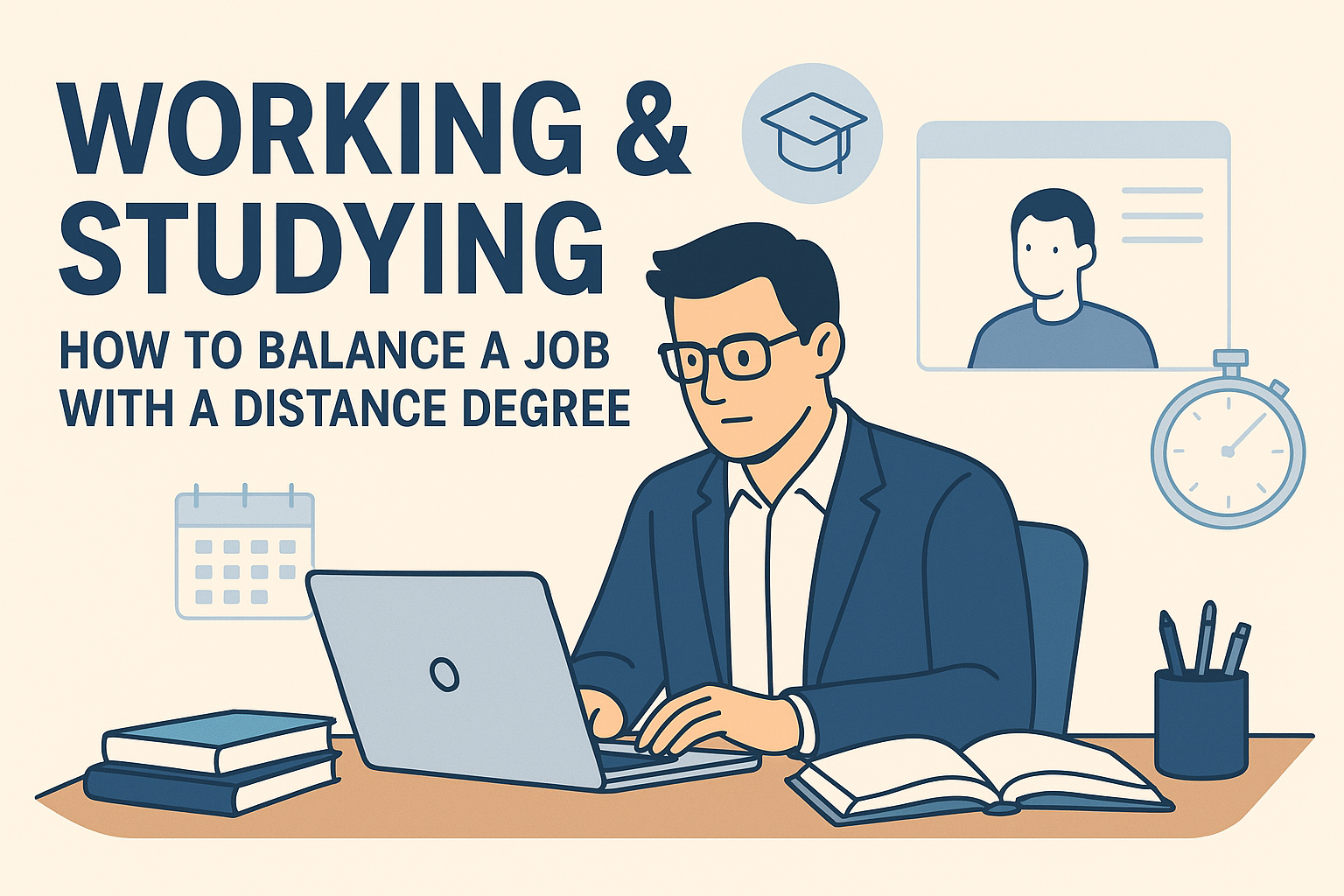
Working & Studying: How to Balance a Job with a Distance Degree – Best Tips for Managing Distance Education Courses
For many working professionals, upgrading their qualifications has become essential for career growth. But with busy schedules, long commutes, and daily responsibilities, traditional classroom learning often isn’t possible. That’s why distance education courses have become the most convenient and flexible way to pursue higher studies without quitting a job.
However, even with flexibility, managing a job and study together can be challenging. The good news? With the right strategies, mindset, and planning, you can successfully balance both worlds and complete your distance degree smoothly.
Let’s break down how you can do it.
1. Set Clear and Achievable Study Goals
Before starting your distance education journey, identify:
- Why you want to study
- What skills or qualifications you want to gain
- How many hours you can commit per week
Clear goals help you stay motivated and reduce the chances of giving up midway.
Tip: Break big goals into small weekly tasks.
Example: “Complete two chapters this week” instead of “Finish the syllabus”.
2. Create a Practical Study Schedule That Fits Your Job
A fixed schedule is the backbone of balancing work and study. Since distance education courses allow time flexibility, you can adjust your study hours around your job.
Try this method:
- Morning Study: 1 hour before work (mind is fresh)
- Evening Slot: 1–2 hours after work
- Weekend Deep Study: 3–4 hours
Even if you can’t follow the same routine daily, consistency in weekly hours matters more.
Use time blocks:
For example, block 6 pm–8 pm purely for studying—no calls, no social media.
3. Use Productivity Tools and Study Apps
Technology can make your learning journey efficient and stress-free.
Here are some useful tools:
- Google Calendar – schedule study timings
- Notion / Evernote – organize notes
- Trello / Asana – track assignments
- Pomodoro Timer – study in focused intervals
- Zoom / Google Meet – for online classes
Distance education courses are designed for flexible digital learning, so using tools enhances your study experience.
4. Communicate with Your Employer (If Possible)
Many companies support employees who want to grow their skills. If you feel comfortable, let your supervisor know about your distance degree.
Some employers may offer:
- Study leaves
- Flexible work hours
- Reduced workload during exams
- Reimbursement for distance education courses
Open communication reduces stress and helps balance responsibilities smoothly.
5. Make Use of Small Time Slots – Micro-Learning
You don’t always need long study hours. Short, focused sessions can help you learn faster.
Examples of micro-learning moments:
- 10 minutes review during tea break
- 20 minutes of reading while commuting
- Listening to audio lessons during workout
- Quick revision slides before sleeping
These small efforts add up to big results.
6. Create a Dedicated Study Space
Having a fixed place for studying helps your brain switch into “learning mode”.
Make sure your study space is:
- Quiet and comfortable
- Free from distractions
- Well-lit
- Equipped with laptop, notes, stationery
This simple setup improves concentration and productivity.
7. Avoid Multitasking — Focus on One Thing at a Time
Many working students make the mistake of mixing tasks—checking work emails while studying or scrolling social media during lectures.
Multitasking reduces productivity by 40%.
Instead:
- Turn off notifications
- Close unnecessary browser tabs
- Use “Do Not Disturb” mode
Give 100% attention to one task, finish it, then move to the next.
8. Stay Motivated and Reward Yourself
Balancing a job and distance education courses can sometimes feel overwhelming. That’s normal.
To maintain motivation:
- Celebrate small wins
- Reward yourself with a break or snack after completing tasks
- Track your progress weekly
- Remember your main goal—career growth
Motivation works best when it comes from daily habits.
9. Take Care of Your Health – Physical & Mental
Studying and working together can be tiring. Maintain a healthy routine:
- Sleep 7–8 hours
- Drink plenty of water
- Take short breaks
- Do light exercise or walking
- Avoid burnout by taking one day off for rest
Healthy mind = better focus = faster learning.
10. Connect with Your Distance Education Community
Most distance education courses offer:
- Online discussion forums
- Student groups
- Live classes
- WhatsApp/Telegram study circles
Interact with peers—it helps with doubt-solving, motivation, and teamwork.
11. Prioritize Wisely During Exam Time
During exams or assignment deadlines:
- Reduce social activities
- Ask for lighter workdays (if possible)
- Focus on important chapters
- Revise using summaries, notes, and previous papers
Temporary sacrifices lead to long-term success.
Conclusion: Balancing Work & Distance Education Is Completely Possible
Pursuing a degree while working may feel challenging, but thousands of students do it successfully every year—and so can you. With proper planning, time management, smart study techniques, and a positive approach, distance education courses can open doors to promotions, new careers, and better opportunities.
If your goal is to grow professionally without pausing your job, a distance degree is one of the most powerful steps you can take.